Losers Never Looked So Good: The Thriving Collector Scene Built Around Formats That Didn't Make It
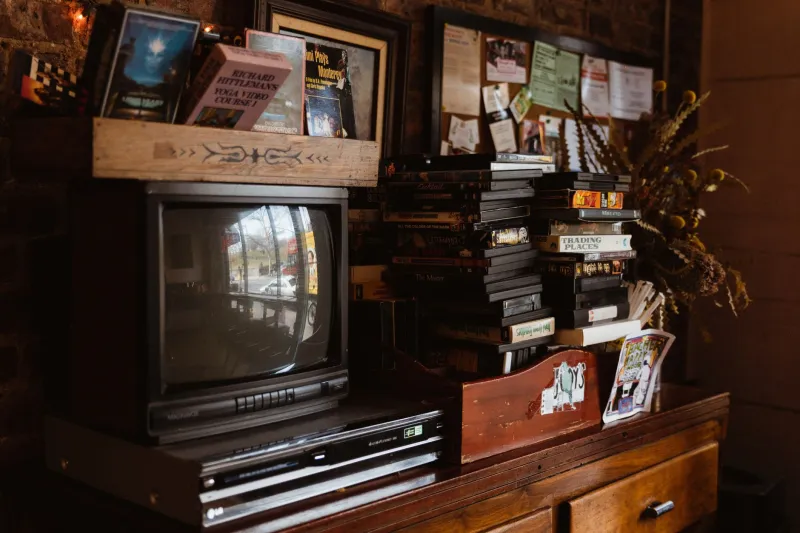
There's something almost poetic about rooting for the underdog — even after the game is over. In the world of home media collecting, a passionate and surprisingly deep-pocketed community has built an entire hobby around the formats that history passed by. Betamax, LaserDisc, HD DVD: these aren't just footnotes in a technology textbook. For the people hunting them down at estate sales, digging through thrift store bins, and bidding hard on eBay, they're the real story.
And the prices? They're anything but a consolation prize.
The Psychology of Picking the Loser
Collecting a 'winning' format is easy. VHS tapes are everywhere. Blu-ray is still on store shelves. But there's a specific kind of collector who gravitates toward the road not taken — and they'll tell you their reasons with zero apology.
"When you own a Betamax deck and a library of tapes, you own something that most people have literally never touched," says Marcus Hale, a 44-year-old media collector based in Portland, Oregon, who's been building his Betamax collection for over a decade. "It's not about being contrarian. It's about the fact that these machines represent a genuine fork in history."
That fork — and the story around it — is a big part of the appeal. Sony's Betamax format launched in 1975 and was, by most technical measures, a superior product to JVC's VHS. Better picture quality, more compact cassettes, stronger build quality on the hardware. And yet, VHS won. The reasons are complicated: longer recording times, lower licensing costs, wider distribution deals. But the outcome stuck in the craw of a lot of early adopters, and their descendants in the collector world haven't forgotten.
LaserDisc: The Format That Was Right Before Its Time
If Betamax is the scrappy underdog, LaserDisc is the sophisticated cousin who was too ahead of the curve for mainstream America. Introduced commercially in 1978, LaserDisc offered video quality that VHS couldn't touch — and it was doing it with a 12-inch optical disc that looked like a chrome Frisbee. It never captured the mass market (you couldn't record on it, and the players were expensive), but it built a fiercely loyal following among cinephiles and home theater enthusiasts.
Today, LaserDisc collecting is a full-on scene. Certain titles — especially early Criterion Collection releases, Japanese-market pressings, and director's cut editions that were never reissued on DVD — command serious money. A mint copy of the original Criterion LaserDisc of Blade Runner can fetch well over $100. Japanese pressings of classic Hollywood films with unique bonus content regularly hit $200 or more.
"LaserDisc was the format for people who cared," says Diane Castillo, a film archivist and collector from Austin, Texas. "The liner notes were thick. The transfers were supervised. You got essays and interviews that never made it to DVD. For certain films, the LaserDisc edition is still the definitive home release."
That's not nostalgia talking — that's a genuine archival argument. And it's why LaserDisc players, particularly the Pioneer Elite series, are still being serviced and sold at prices that would shock anyone who wrote off the format in 1999.
HD DVD: The Most Recent Casualty
HD DVD's format war with Blu-ray ended in 2008, which makes it the youngest dead format on this list — and in some ways, the most interesting from a collector standpoint. The gap between HD DVD and Blu-ray was far narrower than the Betamax vs. VHS divide. The picture quality was essentially identical. The players were often cheaper. And Toshiba's HD DVD had some technical advantages in interactive content that Blu-ray took years to fully match.
When Warner Bros. dropped HD DVD support in January 2008, the format was essentially finished within weeks. Toshiba threw in the towel by February. Overnight, millions of players and thousands of titles became 'dead stock.'
For collectors, that sudden cutoff is a feature, not a bug. The HD DVD catalog is finite and fixed — no new titles will ever be released. Certain films that were exclusive to HD DVD, or received notably different transfers on that format, have become genuine rarities. Combo discs — which played as both HD DVD and standard DVD — are particularly sought after as physical curiosities.
"HD DVD feels like the most collectible of the three right now because it's recent enough that people haven't fully woken up to it yet," says Jordan Wexler, a home theater enthusiast and collector from Chicago. "The prices are still relatively low compared to where I think they're going. I've been stocking up."
What You're Actually Buying
Here's the thing about collecting dead formats: you're not just buying a tape or a disc. You're buying a complete ecosystem. A Betamax collection means sourcing a working deck, tracking down head-cleaning cassettes, finding someone who can still service the machine, and building a library of titles — many of which were never re-released in any other format. It's a commitment, and that commitment is part of what drives the community.
The hardware itself is often the centerpiece. A fully restored Sony Betamax SL-8200 or a Pioneer CLD-99 LaserDisc player isn't just functional — it's a statement piece. These machines were built with a level of material quality that modern electronics rarely match. Metal chassis, precision transports, controls that click with satisfying authority. Put one on a shelf next to a modern streaming box and the contrast is almost funny.
The Market Right Now
If you're thinking about getting into dead-format collecting, the window for bargain hunting is narrowing. Betamax hardware has been appreciating steadily for years. LaserDisc players in good working condition regularly sell for $150 to $400+, with premium Pioneer models pushing higher. Even HD DVD players, which were practically being given away in 2009, have started climbing.
That said, the content side still offers value, especially for HD DVD. Thrift stores and estate sales occasionally surface collections from people who backed the wrong horse in 2007 and just want them gone. Those are the finds that collectors dream about.
The RetroVault take? These formats aren't failures. They're artifacts. Every Betamax tape, every LaserDisc, every HD DVD title is a physical record of a moment when the future could have gone a different way. That's not a consolation prize — that's history you can hold in your hands.
And history, as it turns out, is worth a lot.