First Boot, Forever Gone: The Quiet Movement to Preserve Early Computer Setup Screens as Cultural Artifacts
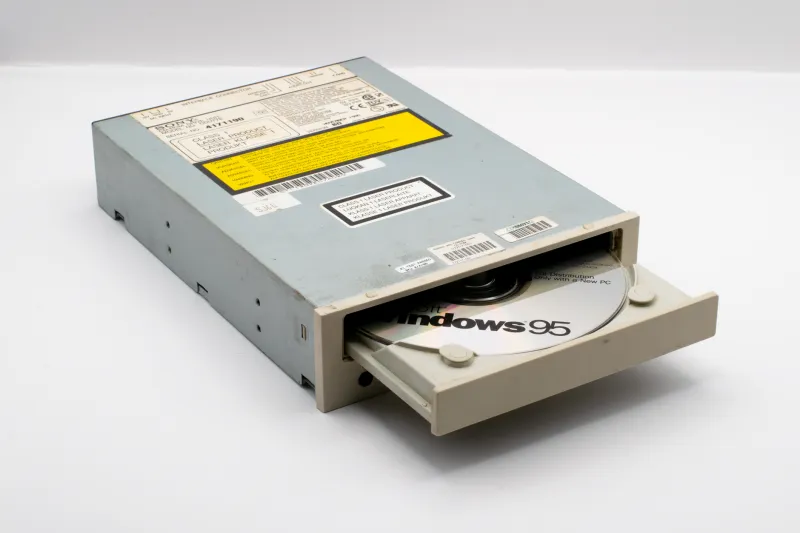
There's a specific kind of memory that lives somewhere between a smell and a feeling. Maybe it's the hum of a tower powering on for the first time. The way the screen flickered before it settled into that deep blue setup background. The little wizard character in the corner of the Windows 95 installation dialog who guided you — step by patient step — through the most exciting and terrifying thing a kid could do in 1996: set up their own computer.
That experience is almost completely gone now. And it turns out, a surprisingly passionate corner of the collector world is deeply upset about that.
The Ephemera Nobody Thought to Save
When people talk about vintage tech collecting, the conversation usually gravitates toward hardware — the beige towers, the chunky keyboards, the monitors that could double as boat anchors. But there's a whole visual language that lived inside those machines that's only now getting its due attention.
Setup wizards. Boot screens. System initialization dialogs. The progress bars that crept across the screen while DOS loaded. The specific shade of teal that Microsoft used in Windows 3.1. The sound — or rather, the silence — of a machine thinking before it finally let you in.
These interfaces weren't designed to be beautiful. They were purely functional, thrown together by engineers who just needed users to click "Next" without breaking anything. But that utilitarian quality is exactly what makes them so striking now. They are completely unadorned documents of a technological moment — raw, unmarketed, and brutally honest about where computers were at the time.
Tech archivists have started calling this category "interface ephemera," and the term fits. Like concert ticket stubs or fast food packaging from the '80s, these screens existed purely in service of something else. Nobody framed them. Nobody saved them on purpose. And now they're disappearing.
Why Collectors Are Suddenly Paying Attention
The demographics driving this trend are pretty predictable once you think about it. Millennials and older Gen X folks — the people who were between the ages of eight and twenty when personal computing exploded in American households — are hitting that nostalgia inflection point. They're old enough to feel the distance, young enough to still remember the specifics.
And the specifics are what matter here. It's not just "old computer stuff." It's the exact screen that appeared when you installed Windows 98 on a Friday night. It's the particular font used in the BIOS setup screen on a Gateway 2000. It's the way early Macintosh boot sequences had that little happy Mac icon that felt, against all logic, genuinely friendly.
Collectors are hunting for a few different things in this space. High-quality screenshots — particularly those captured on original hardware rather than emulated — are circulating on collector forums and occasionally showing up on auction platforms. Physical documentation that included setup screen imagery, like installation guides and quick-start cards, is also gaining traction. But the holy grail remains original installation media: the actual floppy disks and early CD-ROMs that contained the setup software itself, ideally sealed or in documented working condition.
A sealed copy of Windows 95 on floppy disk, complete with its original setup documentation, recently pulled serious collector interest. Early Macintosh System Software disks in good condition are consistently moving on the secondary market. People aren't just buying these to run the software — they're buying them because the experience of that setup process was formative, and owning the artifact is the closest thing to owning the memory.
The Archivist's Perspective
Beyond the collector market, there's a preservation argument that tech historians are making loudly and urgently. The visual design of early computer interfaces tells us something irreplaceable about how the industry thought about users at specific moments in time.
The progression from command-line prompts to early graphical setup wizards isn't just a design history — it's a record of assumptions. Who did these companies think was sitting in front of the screen? What did they think that person needed? How much did they trust the user to make decisions without breaking something?
The shift from DOS-era setup (which assumed you knew what a partition was) to Windows-era wizards (which assumed you absolutely did not) captures an entire cultural transition in how America related to personal technology. That's not a small thing. That's the story of how computers went from tools for specialists to appliances for everyone.
Some universities with digital humanities programs have started formally archiving interface screenshots alongside hardware donations. The Internet Archive has long-running projects dedicated to preserving early software, though the visual setup experience is often an afterthought compared to the programs themselves. Independent archivists are filling gaps where institutions haven't caught up.
What's Actually Collectible Right Now
If you're thinking about dipping into this corner of the market, here's what's actually moving:
Original installation media in working condition — especially anything pre-Windows XP — is the most tangible entry point. Floppy-based OS installations are particularly sought after because the format itself is so fragile and so associated with the era.
Printed setup documentation — those paper guides that walked you through the installation process, often featuring screenshots of the setup screens themselves — functions as a kind of physical archive of the visual experience. In good condition, these are genuinely hard to find.
Original hardware that still boots to period-correct setup screens — a machine that powers on and lands on a functioning early BIOS screen or boots into a vintage OS setup is a living artifact. It's not just showing you a picture of the past; it's running it.
High-resolution documentation photography — this one's a little more niche, but archival-quality prints of setup screens, produced from original hardware captures, are starting to appear in the collector art space. Think of it like vintage tech photography — the subject just happens to be software.
The Clock Is Running
Here's the uncomfortable truth about this collecting category: the window is closing. Hardware degrades. Storage media fails. The people who remember these experiences with enough clarity to care about preserving them are aging. And the broader culture is moving so fast that anything more than ten years old risks becoming completely illegible to younger generations.
That urgency is part of what's driving prices and interest right now. This isn't a slow, scholarly market — it's a scramble. Collectors who got into vintage modems or early routers a few years ago will tell you the same story: by the time something gets mainstream collector attention, the easy finds are already gone.
Setup screens and installation ephemera are still in that early window. The community is small, the prices are still reasonable in many cases, and the historical significance is only going to grow.
Somewhere in a basement or a storage unit, there's a box of old installation disks and printed setup guides that someone is about to throw away. And somewhere else, there's a collector who would genuinely love to save them.
At RetroVault, we think that's worth paying attention to.