Ring Ring, It's History Calling: The Booming Collector Market for Pre-Smartphone Communication Gear
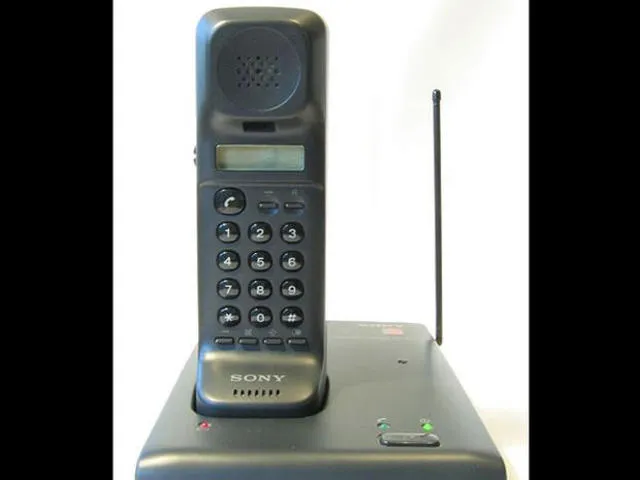
Photo: vintage 1990s cordless phone answering machine retro telecommunications, via s3.amazonaws.com
Let's set the scene. It's 1994. You walk in the front door after school, drop your backpack, and immediately check the answering machine. That little blinking red light either means someone called or it doesn't, and the suspense is real. You hit play, hear the tape rewind, and a tinny voice fills the kitchen. Maybe it's your friend. Maybe it's your aunt. Maybe it's a wrong number. Either way, that machine was the heartbeat of household communication — and now it's a collectible.
The market for vintage pre-smartphone communication devices has been quietly heating up for a few years now, but lately it's picked up enough steam that even casual observers are noticing. Answering machines, cordless phones, early caller ID boxes, payphone hardware, and even intact phone booth components are moving through eBay, Etsy, estate sales, and specialty retro dealers at prices that would have seemed absurd ten years ago.
The Aesthetic Is the Argument
Part of what's driving this market is purely visual. The telecommunications design of the 1980s and '90s was genuinely distinctive — all rounded corners, cream-colored plastic, chunky buttons, and LED displays that glowed amber or green. These objects look different from anything being made today, and that difference reads as personality.
Take the classic two-line answering machine with the built-in tape deck. Compared to the invisible digital assistant sitting on your counter now, that thing has presence. It takes up space. It has moving parts. When it played back a message, you could hear the mechanics of it. Collectors — especially those decorating in a retro-modern or maximalist style — are drawn to that physicality in a way that's hard to explain but easy to recognize when you see a well-curated shelf.
Cordless phones from the late '80s and early '90s have their own devoted following. The original 900 MHz handsets, with their telescoping antennas and belt-clip-friendly designs, look like props from a movie about the future that's now firmly in the past. Brands like Uniden, Panasonic, and GE produced models with enough visual flair that some collectors specifically hunt them down for display rather than function.
Who's Buying This Stuff?
The collector base here breaks down pretty cleanly along generational lines, with a lot of overlap in the middle.
Gen X buyers — now in their mid-40s to late 50s — tend to be drawn to the objects themselves as memory triggers. A particular model of answering machine might be the exact one that was on the counter during a specific period of their lives, and owning it again is a way of holding onto something tactile from before the digital era flattened everything into screens.
Millennials, particularly those in their mid-30s, are often approaching it differently. For them, these objects carry a kind of inherited nostalgia — they remember these things from childhood without the full adult context of what it meant to live with them. There's a romance to the landline era that feels more appealing the further we get from it. No notifications. No read receipts. You called, it rang, someone picked up or they didn't.
"I bought a Panasonic cordless from around 1991 at an estate sale in Ohio," says Marcus, a 36-year-old graphic designer in Columbus who collects retro tech. "I don't even use it. It just sits on my desk and it looks incredible. The color, the shape — it's like a sculpture."
Phone Booth Hardware: The Big Ticket Category
If answering machines are the entry-level play in this market, phone booth artifacts are the high-end game. Actual salvaged components from American payphones — Bell System coin boxes, AT&T-branded handset cradles, the iconic blue-and-chrome housing panels from outdoor booths — have become serious conversation pieces.
Full intact phone booths, the glass-and-aluminum enclosed kind that were common in airports and hotel lobbies through the '80s, occasionally surface at architectural salvage dealers. When they do, they move fast. Bars, restaurants, and home media room enthusiasts snap them up. A fully restored enclosed phone booth in working condition can fetch anywhere from $800 to several thousand dollars depending on condition and provenance.
More accessible are the individual components: coin return mechanisms, original handsets (the heavy black kind that could survive being slammed down repeatedly), and the metal coin slots themselves. These show up at flea markets and online for $20 to $150 depending on condition and completeness. Vintage phone booth signage — particularly anything with the old Bell logo — is especially sought after.
Early Caller ID Devices and the Niche Within the Niche
One of the more specialized corners of this collecting world centers on early caller ID technology. When caller ID became commercially available to residential customers in the early 1990s, it required a separate external device — a small box that would display the incoming number on a tiny LCD screen. These units are now genuinely rare in working condition.
Brands like AT&T, RadioShack (the Realistic line in particular), and Cidco made units that ranged from basic number displays to more elaborate models with memory that could store dozens of incoming calls. Serious collectors look for units that still have their original boxes, which almost never survived, or that come with the original instruction manual.
A working Cidco unit from around 1992, boxed, recently sold on eBay for just over $90. That's real money for what was once considered a throwaway gadget.
How to Start Your Own Collection
The good news for anyone looking to get into this space is that the barrier to entry is still relatively low compared to other retro tech categories. Unlike vintage game cartridges or early Apple hardware, pre-smartphone communication gear is still largely undervalued — which means there's room to build a meaningful collection without spending a fortune.
Estate sales are probably your best bet for finding pieces in good condition at reasonable prices. Older sellers often don't know what they have, and items that would fetch $60 online might go for $5 in a garage sale box. Thrift stores in suburban and rural areas also turn up cordless phones and answering machines regularly, though finding them with original power adapters and handsets takes patience.
Online, eBay and Mercari are the primary hunting grounds. Search specifically for model numbers if you're after something particular — the collector community has done a lot of work cataloging the most desirable models, and that information is freely shared in retro tech forums and subreddits.
And if you're at a flea market and you spot a chunky cream-colored answering machine with a tape mechanism inside, maybe pick it up. That blinking red light might be the start of something.