404: Culture Not Found — How Early Web Pages Became the Most Fragile Artifacts of Our Time
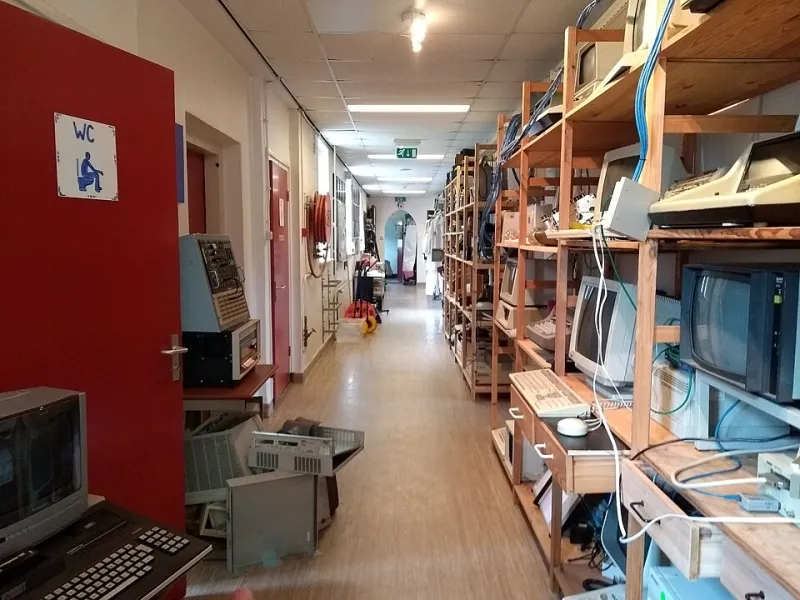
Photo: jmerelo, CC BY-SA 2.0, via Wikimedia Commons
Before the algorithm decided what you should see, people built their own corners of the internet by hand. Tiled backgrounds. MIDI music that played whether you wanted it to or not. Guestbooks. Hit counters. Blinking text declaring, in no uncertain terms, that this was someone's space on the web. GeoCities, the free hosting platform that Yahoo shuttered in 2009, was home to tens of millions of these pages — and when it went dark, it took an enormous chunk of lived digital culture with it.
But not all of it. Not if the archivists have anything to say about it.
The Web That Almost Disappeared
When Yahoo pulled the plug on GeoCities in the US on October 26, 2009, most people barely noticed. Social media had already taken over. MySpace was fading, Facebook was rising, and the idea of maintaining your own HTML page felt quaint. What didn't register at the time was that roughly 38 million user-built pages — representing well over a decade of personal expression, community building, and cultural documentation — were about to be erased.
A loose coalition of volunteers calling themselves the Archive Team scrambled in the final weeks before shutdown and managed to grab a compressed snapshot of what they could. The resulting file, sometimes called the "GeoCities Torrent," runs into the terabytes. It's messy, incomplete, and occasionally bizarre. It's also, increasingly, being treated as one of the most important digital preservation efforts of the modern era.
"People think of the internet as permanent because it feels permanent," says one independent digital archivist who asked to be identified only by his username, Hexboy_77. "But early web content is actually more fragile than a newspaper from 1890. At least the newspaper exists in a physical form somewhere. A web page that wasn't saved is just... gone."
Screenshots, HTML Files, and the New Collector's Market
Here's where things get interesting for the collecting community. While academic institutions like the Internet Archive have focused on preservation at scale, a parallel underground market has emerged around individual artifacts from the early web. We're talking printed screenshots in archival frames, USB drives loaded with saved HTML files from specific neighborhoods of GeoCities, and even printed-out source code from notable early pages — all being traded, bought, and displayed by collectors who understand their cultural weight.
The GeoCities platform organized itself into themed "neighborhoods" — Hollywood for entertainment, Silicon Valley for tech, SoHo for arts. Collectors are particularly drawn to pages from specific neighborhoods that reflect the cultural anxieties and enthusiasms of a given moment: Y2K panic pages, early LGBTQ+ community spaces that existed before mainstream platforms would host them, fan sites for bands that never quite made it, and personal journals that predate the word "blog."
At recent digital collectibles fairs — yes, those exist now — framed prints of rare GeoCities pages have sold for anywhere from $40 to several hundred dollars depending on provenance and cultural resonance. One seller in Portland reported moving a printed screenshot of a 1997 Spice Girls fan page, complete with the original tiled background intact, for $180 to a buyer who remembered visiting the exact page as a kid.
Museums Are Starting to Take Notice
This isn't just a flea market phenomenon anymore. Institutions are catching up. The Rhizome organization at the New Museum in New York has been doing serious work in digital preservation for years, and their ongoing projects have helped legitimize the idea that a saved web page can carry the same cultural significance as a physical artifact in a glass case.
Smaller regional museums and digital art spaces have begun hosting exhibits around early web aesthetics — showing printouts, emulated browser windows running archived pages, and even recreated desktop environments from the late '90s so visitors can experience the context in which these pages originally existed. The response, particularly from millennials in their 30s and 40s, has reportedly been emotional in a way that curators didn't fully anticipate.
"There's a grief element," says one exhibit coordinator who helped stage an early web retrospective in Chicago. "People see a page that looks like something they made when they were 14, and they realize that version of themselves — and that version of the internet — is genuinely gone. It hits differently than nostalgia for a toy or a TV show."
Authentication and Value: A New Frontier
One of the trickier aspects of this collector space is verification. How do you prove that a saved HTML file is authentic and unaltered? How do you establish that a screenshot was taken at the time the page was live, rather than reconstructed later?
Some collectors rely on metadata embedded in old files — creation dates, file formats consistent with the era, even the specific fonts rendered by browsers of the period. Others cross-reference against the Wayback Machine at archive.org, which holds its own snapshots of millions of early web pages and can serve as a kind of authentication resource.
Hexboy_77 describes a process that sounds almost like authenticating a signed baseball card: "You look at the file structure, the image compression style, the HTML tags used. Certain things like <blink> tags or <marquee> elements tell you something about when it was written. It's forensic, honestly."
For serious buyers, provenance matters. A saved page is worth more if it comes with documentation of when it was captured and who captured it. Screenshots taken before the 2009 shutdown, with verifiable timestamps, command the most interest.
Why It Matters Beyond Nostalgia
There's a bigger argument here that goes beyond the collector market. Early personal web pages represent a form of self-expression that was, in many ways, more raw and democratic than what came after. Social media platforms standardized how people present themselves online. GeoCities let people be genuinely weird, genuinely themselves, in a way that's harder to find now.
Those pages documented communities — fandoms, local scenes, niche hobbies — that might not have been represented anywhere else in the historical record. Preserving them isn't just an act of nostalgia. It's an act of cultural history.
At RetroVault, we've always believed that the things people made and used and loved deserve to be remembered. Usually that means cartridges and hardware and physical media. But the early web was also a place people made things — and those things are worth saving too.
If you've got saved files, old screenshots, or archived pages from the early internet sitting on an old hard drive somewhere, it might be time to dust them off. You might be sitting on something rarer than you think.