From Floppy to Forever: Why Obsolete Storage Gadgets Are the Hottest New Obsession in Retro Tech Collecting
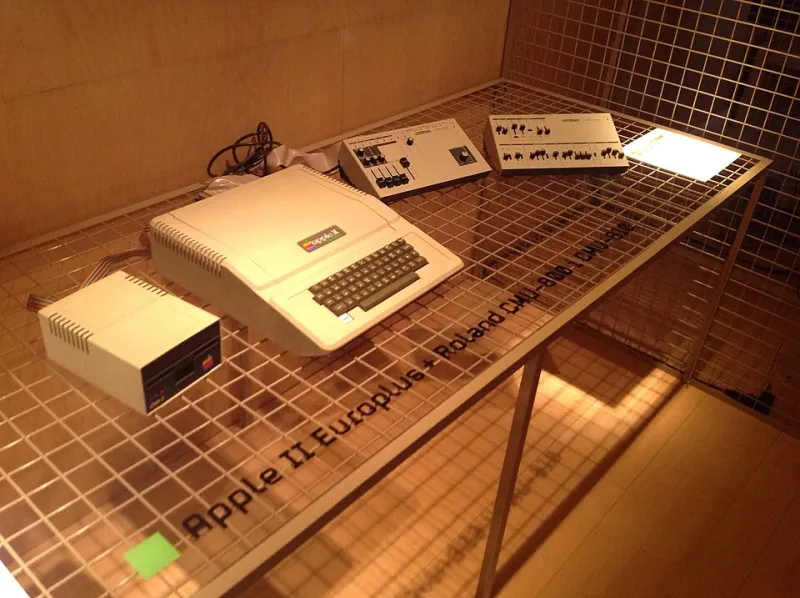
Photo: Kippelboy, CC BY-SA 4.0, via Wikimedia Commons
Let me paint you a picture.
It's 1998. You've got a Zip drive humming on your desk, a stack of those satisfyingly chunky 100MB disks fanned out beside it, and the genuine sense that you are living in the future. You're saving everything — school projects, downloaded MP3s, maybe a pirated game or two. The disk goes in with a click. The drive whirs. Data, stored. Life, good.
Now imagine someone telling you that in 25 years, people would be hunting those same Zip drives at estate sales, paying real money for them on eBay, and displaying them on shelves next to their vinyl records and film cameras.
You probably would have laughed.
And yet here we are.
The Pre-Cloud Era Was Tactile in a Way We've Forgotten
There's a reason vinyl records never actually died, and it has nothing to do with audio quality debates. It's about physicality. The ritual of pulling a record from its sleeve, placing the needle, watching it spin — that's an experience. Streaming is a transaction. There's a difference.
The same logic, I'd argue, is now being applied to obsolete storage media. And honestly? It makes complete sense.
We live in an era where data is invisible. Your photos live in iCloud. Your documents float in Google Drive. Your music exists as a license, not an object. For a lot of tech enthusiasts — especially those who grew up during computing's hands-on golden age — that invisibility feels like a loss. Something got streamlined away that was actually worth keeping.
Floppy disks, Zip drives, CompactFlash cards, early USB prototypes, Jaz drives, MiniDiscs, Bernoulli boxes — these weren't just storage solutions. They were objects. You labeled them with a Sharpie. You lost them in couch cushions. You held them up to the light trying to figure out if they were corrupted. They had presence.
Collecting them is, in a very real sense, collecting proof that computing used to feel like something.
The Most Sought-After Formats Right Now
Not all obsolete storage is created equal in the collector's eye. Here's a quick rundown of what's generating the most heat in the market:
3.5-inch Floppy Disks (Factory Sealed) — Particularly factory-sealed boxes of name-brand floppies (Maxell, Sony, Verbatim) in their original retail packaging. Sealed 10-packs in good condition regularly sell for $20–$60, and rare promotional or branded variants fetch considerably more. Original software on floppy — especially early operating systems and games — can reach into the hundreds depending on title.
Iomega Zip Drives (Original 100MB, Parallel Port Models) — The Zip drive had a moment, and collectors know it. Original parallel port models bundled with their original boxes, cables, and a few disks are the sweet spot. Expect $40–$100 for complete, clean setups.
Early USB Flash Drives (Pre-2004) — This one surprises people. The very earliest USB drives — chunky, slow, and usually capped at 8MB or 16MB — are increasingly treated as computing artifacts. The novelty factor is enormous: a device that once cost $50 and held almost nothing now sits in a display case as a piece of tech history.
SyQuest Cartridges — Largely forgotten outside of graphic design circles, SyQuest was the Zip drive before the Zip drive. Original cartridges in working condition, especially with their original drives, are genuinely rare and prized by serious collectors.
MiniDisc Players and Media — Sony's MiniDisc had a cult following in the late '90s and early 2000s, especially among audiophiles and recording enthusiasts. Complete players with accessories and a collection of recorded or blank discs can fetch $100–$300 in good condition.
Why This Is Bigger Than Nostalgia
Here's where I want to push back a little on the easy narrative.
Yes, nostalgia is a factor. Of course it is. But reducing the obsolete storage collecting trend to "people miss the old days" undersells what's actually happening.
A meaningful chunk of the people hunting for Zip drives and early USB sticks aren't doing it because they personally remember them. Gen Z collectors — the same cohort driving the VHS tape revival and keeping film photography alive — are drawn to these objects for a different reason. They represent a philosophy of technology that feels increasingly radical: the idea that your data should be something you can touch, label, and physically hand to another person.
In a world of subscription services and algorithmic storage, there's something almost countercultural about a floppy disk.
"I never used a Zip drive growing up," admits Dani R., a 24-year-old collector from Austin who's assembled a fairly comprehensive obsolete storage museum in her apartment. "But when I hold one, I understand something about how computing worked that I don't get from my MacBook. It's concrete. It makes sense in a way the cloud never does."
That sentiment — tech that makes sense because you can hold it — is showing up in collector communities with increasing frequency.
Condition, Rarity, and the Box Factor
Just like any collectible category, condition and completeness drive value. For storage media specifically:
- Original packaging is a massive multiplier. A Zip drive in a beat-up unit is worth maybe $15. The same drive in its original retail box with all accessories, documentation, and a warranty card? You're looking at three to four times that.
- Working condition matters — but not always. For display collectors, aesthetics often outweigh functionality. But for enthusiasts who actually want to use the hardware (yes, they exist), verified working condition commands a premium.
- Branded and promotional variants are the hidden gems. Corporate-branded USB drives from early-2000s tech conferences, limited-edition Zip disk color variants, and OEM storage bundles with specific software carry extra collector interest.
RetroVault's Take: This Is Just Getting Started
We've watched a lot of collecting trends cycle through over the years, and the pattern with obsolete storage feels familiar — in a good way. It's where vintage gaming was fifteen years ago: enthusiasts ahead of the curve, prices still accessible for newcomers, and a genuine community of people who care deeply about preserving physical computing history.
The cloud isn't going anywhere. But neither, apparently, is the deep human urge to hold your data in your hands.
If you've got old storage gadgets collecting dust in a drawer — or a garage full of tech from a previous decade — it might be time to take a closer look. The vault is open, and what's inside might be worth a lot more than you think.