Pocket Power: How the Original Game Boy Became the Hottest Collectible in Retro Gaming
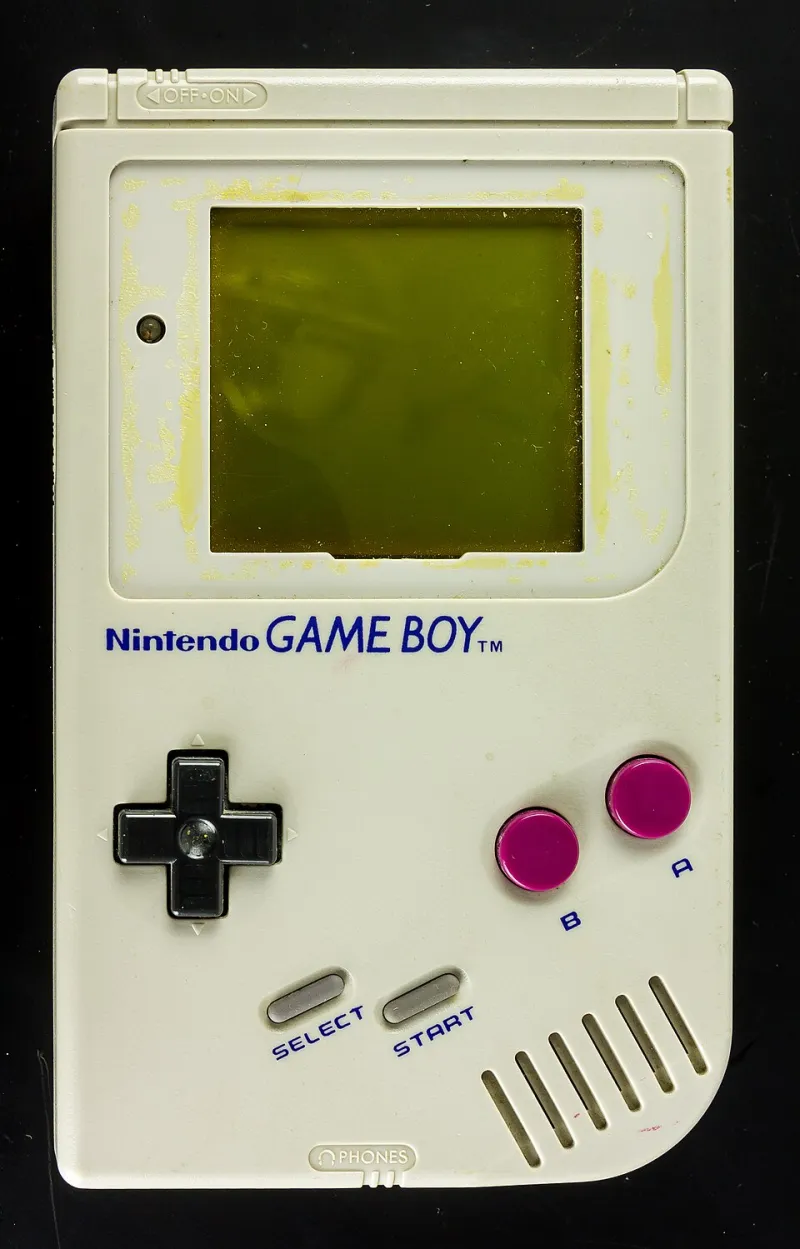
Photo: Raimond Spekking, CC BY-SA 4.0, via Wikimedia Commons
There's something almost poetic about a device that ran on four AA batteries now running up prices that would make your parents' eyes water. The original Nintendo Game Boy — that chunky, greenish-screened rectangle that defined portable gaming for an entire generation — has quietly transformed from garage sale fodder into a legitimate investment-grade collectible. If you've got one gathering dust in a closet somewhere, this might be a good time to dig it out.
At RetroVault, we've watched the handheld market evolve over the past several years with genuine fascination. What started as a niche corner of the retro gaming hobby has exploded into something that looks a lot more like the vintage watch or vinyl record markets — complete with price guides, authentication experts, and collectors willing to drop four figures on a single unit. So what's fueling this surge, and more importantly, what should you actually be looking for?
The Numbers Don't Lie
Sealed, mint-condition original Game Boy units have sold on platforms like Heritage Auctions and eBay for anywhere between $1,500 and $5,000 depending on condition and completeness. Even loose units in solid working condition routinely fetch $60 to $150 — a far cry from the $5 bins at thrift stores where they languished through most of the 2000s and early 2010s.
Cartridges have followed a similar trajectory. Common titles like Tetris or Super Mario Land are still reasonably affordable, but rarer releases — particularly late-run or limited-distribution games — have seen valuations climb steadily year over year. A complete-in-box copy of Trip World, a game that saw extremely limited North American distribution, has sold for upward of $2,000. That's not a typo.
The broader retro gaming market has certainly lifted all boats here, but the Game Boy occupies a uniquely sentimental spot. It was the first gaming device for tens of millions of American kids born between roughly 1978 and 1990, and those kids are now adults with disposable income and a powerful urge to reconnect with their childhoods.
Rare Variants: The Hidden Gems Most Collectors Overlook
Here's where things get genuinely interesting for serious collectors. Most people think of the Game Boy as a single product — that familiar battleship-gray shell. But Nintendo produced a surprising number of variants over the system's lifespan, and some of them are extraordinarily hard to find today.
Japanese market exclusives represent some of the most coveted pieces in any collection. The Japanese launch version carried subtle hardware differences, and Japan received color variants — including a red shell and a yellow shell — that were never officially sold in the US. Finding these stateside in excellent condition requires patience, a reliable import network, and usually a willingness to pay a premium.
Then there are the promotional and bundle units. Game Boys bundled with specific games or distributed through retailers like Toys "R" Us sometimes carried unique packaging or minor cosmetic differences. These box-complete bundles are particularly prized because so few people held onto the original packaging for what was, at the time, just a kid's toy.
Special edition units tied to specific franchises or events also command serious attention. The Play It Loud! series from the mid-1990s introduced transparent and brightly colored shells — red, yellow, green, black, and white — and while these aren't impossibly rare, finding them in excellent cosmetic condition is harder than it sounds. Plastic yellowing, screen scratches, and shell cracks are the enemies of value here.
Fakes, Frankenboys, and How to Protect Yourself
The darker side of any booming collectibles market is the counterfeit problem, and the Game Boy space is no exception. The term collectors use for units assembled from mismatched or replacement parts is "Frankenboi" — and they're far more common than casual buyers realize.
Authentication starts with the serial number. Genuine original Game Boys carry a serial number printed on a label on the back of the unit, and cross-referencing that number against known production batches can reveal a lot. The font, label placement, and label material have all been documented extensively by the collecting community, and deviations are red flags.
Internally, the circuit board should carry Nintendo markings and a date code consistent with the unit's claimed production period. Replacement boards, while not necessarily fraudulent, significantly reduce collector value. If you're buying a unit described as "all original" or "unmolested," it's worth asking the seller for internal photos before committing.
Cartridges carry their own authentication challenges. Reproduction carts — repro boards loaded with ROM files and placed in authentic-looking shells — have flooded the market. The screw type is the first tell: original Nintendo cartridges used a proprietary "gamebit" screw that most people don't have a driver for. If a cartridge has been opened and reclosed with a standard Phillips screw, that's an immediate concern. Board markings, chip date codes, and PCB color all factor into a thorough authentication.
For high-value purchases, consider reaching out to established authentication services or active members of communities like the GameBoy Collectors Club or relevant subreddits. The community knowledge base is remarkable, and most serious collectors are happy to help newcomers avoid costly mistakes.
The Nostalgia Economy and What Comes Next
It's worth stepping back and asking why this is happening right now. The nostalgia economy is a real and well-documented phenomenon — researchers have found that nostalgia functions as a kind of emotional anchor during periods of uncertainty, and the past several years have delivered plenty of that. Millennials and Gen X buyers, now in their prime earning years, are increasingly channeling discretionary spending toward objects that carry personal meaning.
The Game Boy hits that sweet spot perfectly. It's tangible, it's functional (most units still work with minimal maintenance), it's visually distinctive, and it carries decades of cultural weight. Unlike a lot of digital-era nostalgia, you can actually hold it in your hands and play it — and that physical connection matters enormously to collectors.
Looking ahead, most market observers expect values to continue climbing for complete-in-box and sealed examples, while loose units stabilize at elevated levels. The supply of truly excellent specimens isn't growing, and demand from new collectors entering the hobby shows no signs of slowing.
At RetroVault, we think the Game Boy story is far from over. Whether you're looking to start a collection, add a centerpiece piece, or finally figure out what that box in your parents' basement is actually worth — the time to pay attention is right now.