Junk Drawer to Display Case: Why Your Old Modem Might Be Worth Real Money Now
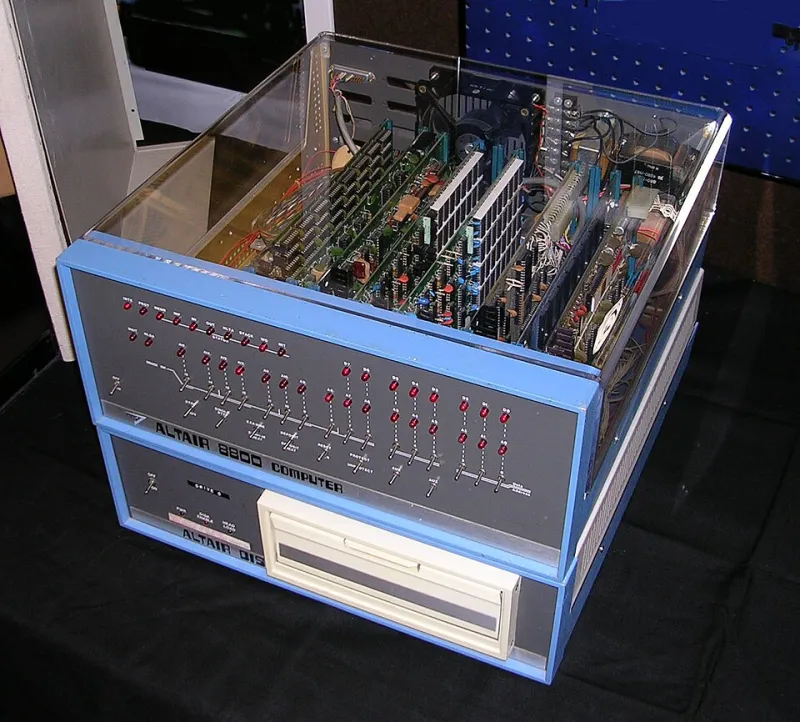
Photo: Swtpc6800 en:User:Swtpc6800 Michael Holley, Public domain, via Wikimedia Commons
Let's be honest: most of us have thought about e-waste at some point in the last few years. The old tower sitting in the garage, the bag of tangled cables, the dusty ISA cards you kept meaning to throw away — it all starts to feel like clutter eventually. But before you haul any of it to the recycling center, you might want to spend an afternoon doing some research. Because what looked like obsolete junk a decade ago has, in a genuinely surprising turn of events, become the stuff of serious collector culture.
I'm talking about Voodoo graphics cards. 3Com modems. Creative Sound Blasters. Early Pentium-era motherboards. The hardware that powered the computers of the 1990s and early 2000s is now changing hands for prices that would have seemed like a bad joke when people were tossing this stuff at surplus sales for fifty cents a pound.
How Did We Get Here?
The short answer is community. The longer answer involves a fascinating convergence of retro computing hobbyists, YouTube documentarians, and a generation of tech workers who grew up watching their parents' computers dial into AOL at 56k.
Retro computing communities — centered on forums like Vintage Computer Federation, active Discord servers, and YouTube channels with hundreds of thousands of subscribers — have spent years documenting, preserving, and celebrating hardware that the mainstream tech world had completely written off. What started as a niche passion project has gradually accumulated enough critical mass to function like any other collector market: with price discovery, condition grading, and authentication concerns.
"People forget that this stuff is genuinely historical," says Marcus T., a collector based in Austin who has been acquiring vintage PC hardware for about twelve years. "The Voodoo 1 wasn't just a graphics card. It was the thing that made 3D gaming real for an entire generation of American households. That has cultural weight, and cultural weight eventually translates into market value."
He's not wrong. The 3Dfx Voodoo line of graphics accelerators — particularly the original Voodoo 1 and the later Voodoo 2 — are among the most sought-after components in the vintage PC space right now. New-in-box examples have sold for upward of $400 to $600, and even used, working cards command $100 to $200 depending on the specific manufacturer variant (Diamond, Creative, and Orchid each made their own versions, and some are rarer than others).
The Most Wanted List
So what exactly are collectors hunting for? The list is more specific than you might expect, because not all old hardware is created equal in the eyes of the market.
3Dfx Voodoo Graphics Cards top almost every serious collector's wish list. The original Voodoo 1, Voodoo 2, and the ill-fated Voodoo 5 5500 (which arrived just as 3Dfx was collapsing as a company) are all highly desirable. The Voodoo 5 6000 — a prototype that was never commercially released — is essentially a unicorn, with the handful of known working examples valued in the thousands.
US Robotics and 3Com Modems occupy a different but equally passionate corner of the market. The USR Sportster and Courier lines are particularly beloved, both for their industrial build quality and for the role they played in connecting America to the early internet. A boxed, complete USR Courier V.Everything can fetch $150 to $300 from the right buyer.
Creative Sound Blaster Cards — especially the original Sound Blaster and the Sound Blaster 16 — have a dedicated following driven largely by DOS gaming enthusiasts who want period-correct audio hardware for their vintage builds. The ISA versions are generally more sought-after than later PCI iterations.
Early Apple Hardware deserves its own mention. Original Apple II cards, early Mac peripherals, and even the hardware from the NeXT era have become significant collectibles. Apple's cultural footprint is enormous enough that anything carrying that logo from the pre-iMac era carries a nostalgia premium.
The E-Waste Problem Is Also an Opportunity
Here's an uncomfortable truth: an enormous amount of historically significant computer hardware has already been destroyed. E-waste recycling, while environmentally important, doesn't discriminate between a generic Dell tower and a machine that was actually part of computing history. Collectors and preservation organizations have been sounding this alarm for years, and it's worth taking seriously.
But the flip side of that loss is opportunity. Because so much of this hardware was discarded without a second thought, surviving examples in good condition — and especially complete-in-box examples — are genuinely scarce. Scarcity plus demand equals rising prices, and that's exactly what we're seeing.
"I found a sealed box of Voodoo 2 cards at an estate sale in Ohio three years ago," recalls Diana K., a collector and retro computing enthusiast from Columbus. "The family had no idea what they had. I paid $40 for the whole box. Those cards are worth several hundred dollars each today. I kept two and sold the rest to fund other parts of my collection."
Stories like Diana's aren't as rare as you'd think. Estate sales, storage unit auctions, and even Goodwill bins still occasionally surface genuine treasures — though the market is more picked-over than it was even five years ago as awareness has grown.
Is This Actually an Investment?
Let's pump the brakes slightly here, because it's important to be honest about what this market is and isn't. Vintage computer hardware is not a liquid asset. It doesn't trade like stocks, and finding the right buyer for a specific piece of hardware can take weeks or months. Condition grading is largely informal compared to, say, the graded video game market, and price discovery can be inconsistent.
That said, for collectors who are buying things they genuinely love — hardware that connects them to formative experiences with technology — the financial upside has become a very real secondary benefit. The collectors we spoke with universally emphasized that passion comes first. The investment case follows from genuine scarcity and genuine community interest, not from speculation.
At RetroVault, we see vintage computer hardware as one of the most underappreciated categories in the broader retro collectibles space. The stories these objects carry — of late nights gaming, of first internet connections, of software that genuinely changed what computers could do — are as culturally meaningful as anything pressed into a vinyl record or printed in a comic book.
So before you make that trip to the electronics recycling center, spend an afternoon with a search engine and an open mind. The junk in your attic might have a second life — not in a landfill, but in a display case.