The Beige Revival: How Ugly Old Computer Cases Became the Hottest Home Décor Flex
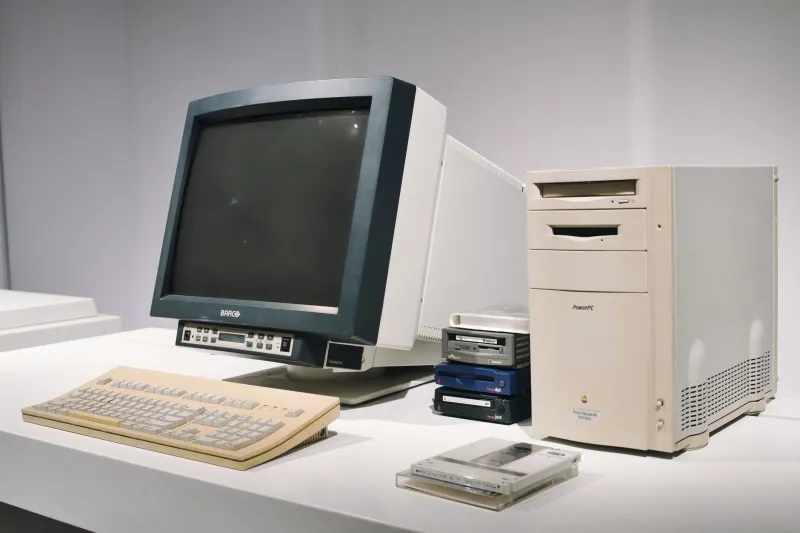
There's a very specific shade of off-white that defined an entire decade of American life. Not quite cream, not quite gray — just beige. It lived in offices, dens, and spare bedrooms from roughly 1982 to 1999, humming quietly under fluorescent lights and accumulating coffee rings. Nobody loved it. Nobody was supposed to.
And yet, right now, that same beige plastic is selling on eBay for hundreds of dollars. Collectors are hunting it down at estate sales. Interior designers are sneaking it into studio apartments between mid-century credenzas and fiddle-leaf figs. The vintage computer case — once the visual punchline of every tech upgrade — has officially crossed over into collectible territory, and the market is moving faster than most people expected.
From Dumpster Fodder to Display Piece
For most of the 2000s and 2010s, old computer towers were the thing you dragged to the curb on bulk trash day. Electronics recyclers wouldn't even take them without a fee. The idea that someone would want an empty beige AT-style tower from 1991 would've gotten you laughed out of any self-respecting thrift store.
But something shifted. Partly it's the broader vintage tech wave — the same cultural current that brought back vinyl records, film cameras, and mechanical keyboards. Partly it's generational: the people who grew up watching their parents boot up a Packard Bell Legend or a Compaq Presario are now in their 30s and 40s, with disposable income and a powerful hit of childhood memory attached to those chunky plastic forms.
"I bought my first IBM PS/2 case at an estate sale in Ohio for twelve bucks," says Marcus T., a Columbus-based graphic designer who now has eleven vintage cases displayed across two rooms of his apartment. "I wasn't even sure why I wanted it at first. But once it was sitting on my shelf next to my records, it just fit. It looked like an artifact. Which, I guess, it is."
Marcus isn't alone. A quick scroll through collector communities on Reddit and Facebook turns up dozens of people doing the same thing — stripping out the guts, cleaning up the cases, and either leaving them empty as sculptural objects or repurposing them as storage, planters, speaker housings, or mini display cases for other retro memorabilia.
Which Brands Are Moving the Needle
Not all beige boxes are created equal, and the collector market reflects that clearly. A few manufacturers have pulled ahead of the pack in terms of both cultural cachet and dollar value.
IBM is the obvious blue-chip option. The original IBM PC 5150 and its descendants carry serious historical weight — these were the machines that defined what a personal computer was supposed to look like. A clean, complete IBM PC XT or AT case in good cosmetic condition can fetch anywhere from $150 to over $400 depending on condition and completeness. Add original badging, intact drive bay covers, and a matching keyboard, and you're looking at even more.
Commodore cases occupy a different corner of the market. The Commodore 64 and Amiga line have fanatical followings, and the all-in-one form factor — keyboard and computer in a single wedge-shaped unit — makes them visually distinctive in a way that generic tower cases aren't. A clean Amiga 1000 or Commodore 128 case, even without working internals, regularly clears $100 to $200.
Packard Bell is the sleeper pick. Often dismissed as the bargain-bin brand of the early 90s, Packard Bell cases have a weirdly specific aesthetic — slightly more colorful, occasionally featuring teal or burgundy accents — that's started to resonate with collectors who grew up with them. Prices are still relatively low compared to IBM, which makes them an accessible entry point for new collectors.
Apple deserves a mention, though it occupies its own stratosphere. The original beige Apple IIe and early Macintosh cases have been collectible for years, and pristine examples now command prices that put them firmly in investment-grade territory. The Snow White design language Apple used through the 80s — all parallel ridges and deliberate geometry — holds up as genuine industrial design history.
The Aesthetic Argument
Here's the thing that surprises people when they actually sit with one of these old cases: they're not ugly in the way we remember. The beige-ness was a product of its era, sure, but the forms themselves are often quietly interesting. Vents, ridges, drive bay covers, LED windows, manufacturer logos stamped into plastic — there's a functional honesty to the design that feels almost refreshing compared to today's tempered glass and RGB lighting.
"There's a term in design circles — 'honest materials' — where the object doesn't try to be something it's not," explains Denise K., a Chicago-based interior stylist who's been incorporating vintage tech into client spaces for the past three years. "These old computer cases are completely honest. They're plastic. They're utilitarian. They don't pretend otherwise. And in a room full of things trying too hard, that reads as confident."
Denise typically pairs vintage cases with other industrial or mid-century elements — steel shelving, concrete surfaces, warm Edison lighting. The contrast works, she says, because the cases feel grounded in a way that purely decorative objects don't. They did a job. They have history baked into their surfaces.
What to Look For (and What to Avoid)
If you're thinking about starting a collection, condition is everything. The biggest enemy of vintage plastic is yellowing — a chemical process called oxidation that turns beige to a dingy, uneven yellow-brown over time. Heavily yellowed cases lose significant value, though a dedicated community of retro restorers has developed a process called "retrobrighting" that can reverse the damage using hydrogen peroxide and UV light.
Beyond yellowing, look for intact drive bay covers (those little blank plastic inserts that cover unused bays are almost always missing), original manufacturer badges, and undamaged front bezels. Cases with their original power buttons and LED indicators intact are worth more than stripped examples.
For storage and display repurposing, the tower form factor gives you the most interior space to work with. Some collectors cut custom shelves to fit inside, turning old towers into tiny display cabinets for cartridges, figurines, or other small collectibles — which is honestly one of the more clever uses we've seen.
The Bottom Line
The vintage computer case market is still early enough that patient hunters can find genuine bargains. Estate sales, Goodwill computer sections, and local Facebook Marketplace listings are all productive hunting grounds, especially in suburban areas where old office equipment still surfaces regularly. The window for cheap finds is narrowing, though — as more collectors enter the space, prices at the bottom are creeping up.
What started as a niche quirk — who collects empty computer cases? — has turned into a legitimate corner of the retro tech world, with its own aesthetic logic, its own brand hierarchy, and its own community of people who see something worth preserving in thirty-year-old plastic.
Turns out beige had more to say than anyone gave it credit for.