The Card That Changed How You Heard Everything: Collecting Vintage PC Sound Cards
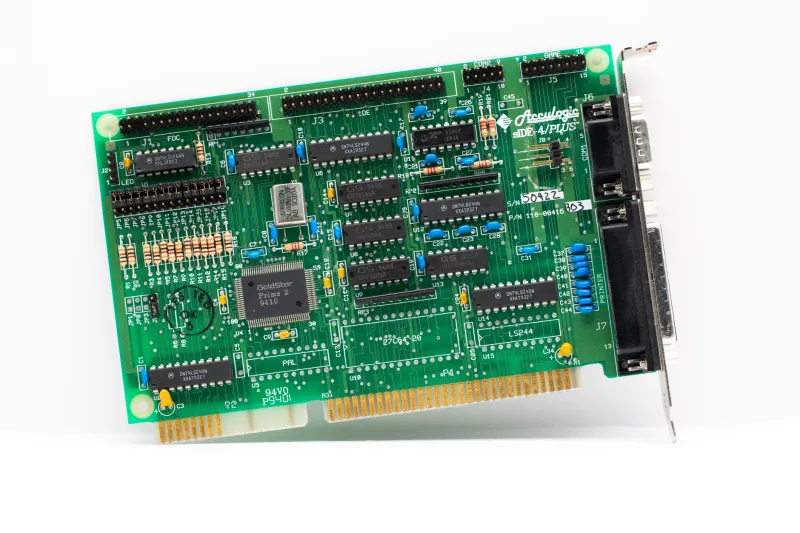
Close your eyes for a second. You're thirteen years old, it's 1994, and your dad just helped you snap a new Sound Blaster 16 into your family's beige tower. You boot up Doom, and for the first time—actual music, actual sound effects, not just that tinny PC speaker beep you'd been tolerating for years. The room sounds different. You feel different.
That moment? Millions of Americans had a version of it. And now, decades later, the little circuit board responsible for it is turning into a legitimate collectible.
Why Sound Cards, and Why Now?
Most retro tech conversations start with CPUs, graphics cards, or full systems. Sound cards have always been the overlooked middle child of PC hardware collecting. But that's changing fast. A handful of factors are driving renewed interest: aging collectors who grew up with this gear are hitting their peak earning years, the retro PC gaming community is expanding, and there's a growing appreciation for analog-era audio engineering that produced genuinely warm, distinctive sound.
There's also a practical angle. Vintage sound cards aren't just display pieces—they're functional hardware that DOS and early Windows gaming enthusiasts actively use in period-correct builds. That dual identity as both working component and historical artifact gives them a collector appeal that, say, a decorative floppy disk just can't match.
The Holy Trinity: Sound Blaster, Gravis, and Roland
If you're new to this corner of the collectibles world, three names dominate every conversation.
Creative Sound Blaster is the name most American PC users remember. The Sound Blaster 16 became the de facto standard for DOS gaming, and Creative's early cards—particularly the original Sound Blaster (CT1320) from 1989—are now considered foundational artifacts. But it's the Sound Blaster AWE32 and AWE64 that collectors really chase. These cards featured wavetable synthesis that produced orchestral MIDI audio that still sounds impressive today. A clean, boxed AWE32 in good condition can fetch anywhere from $80 to over $200 depending on the variant and included daughterboards.
Gravis Ultrasound, often just called the GUS, is the card audiophiles and game historians get genuinely emotional about. Produced by Advanced Gravis out of Canada, the Ultrasound used sample-based wavetable synthesis that was technically superior to most of the competition. It had a devoted following in the demoscene—the underground digital art community that pushed PC hardware to its absolute limits—and that legacy has made it a prized collectible. A working Gravis Ultrasound MAX in original packaging? You're looking at $150 to $300 on a good day, sometimes more.
Roland cards, particularly anything featuring the MT-32 sound module or the Roland RAP-10, occupy a more niche but deeply respected corner of the market. Roland's hardware-based synthesis produced some of the most iconic game music of the early 1990s, and collectors who want the most authentic possible experience with classic Sierra and LucasArts titles know Roland is the gold standard. These are rarer and command premium prices accordingly.
What Makes a Sound Card Valuable?
Like any collectible, condition is everything—but sound cards have some specific wrinkles worth knowing.
Working condition matters enormously. Unlike, say, a vintage concert ticket where condition is purely visual, a sound card that doesn't function loses most of its appeal to the active retro PC community, which represents a huge chunk of buyer demand. Always verify functionality before buying, and ask sellers specifically about OPL chip condition, since those FM synthesis chips are often the first thing to degrade.
Rare variants and revisions are where things get interesting. Many popular cards went through multiple hardware revisions, and some revisions are dramatically more desirable than others. The Sound Blaster Pro 2.0, for instance, uses a different OPL chip than its predecessor, which produces slightly different audio characteristics—and collectors absolutely care about that distinction. Do your homework on revision numbers before committing to a purchase.
Original packaging and documentation provide the same premium bump they do across all retro tech categories. A Sound Blaster AWE64 Gold in its original box with the manual, installation discs, and any bundled software intact is worth significantly more than a bare card in an antistatic bag. We've talked before on RetroVault about how original paperwork can dramatically affect value, and sound cards are no exception.
Daughterboards and expansion modules are often missing from otherwise complete setups. The Wave Blaster daughterboard that plugged into certain Sound Blaster cards, for example, is increasingly hard to find separately and adds real value to a complete package.
Where to Find Them
Ebay remains the most active marketplace, but pricing is all over the place. You'll find working AWE32 cards listed anywhere from $40 to $250, so knowing your target and its fair market value before you bid is essential. Local estate sales and thrift stores in areas with older suburban populations can still occasionally yield finds, though that window is narrowing every year.
Retro computing forums—particularly the Vogons community—are goldmines for both purchasing and researching. Sellers there tend to be knowledgeable, pricing is often fair, and you're more likely to get accurate condition descriptions from someone who actually understands what they're selling.
Facebook Marketplace has quietly become a surprisingly good source for bulk lots of old PC components, which sometimes include sound cards from people who just want the old hardware out of their garage.
The Sleeper Picks Collectors Are Watching
Beyond the obvious heavy hitters, a few cards are gaining attention as undervalued sleepers.
The Turtle Beach Multisound series from the early 1990s used professional-grade components and was marketed toward music production as much as gaming. They're not common, most casual sellers don't know what they have, and the audio community is slowly waking up to them.
The Ensoniq AudioPCI and its descendants—which eventually became the foundation for Creative's later cards—are affordable right now but represent a genuine bridge between the ISA era and the PCI transition. Historically significant, still cheap, and increasingly hard to find in clean condition.
Anything with an OPL2 or OPL3 FM synthesis chip from Yamaha is worth a second look, as FM synthesis has experienced a serious cultural renaissance thanks to chiptune musicians and retro game composers who prize that specific sound.
More Than Nostalgia
What's compelling about vintage sound card collecting isn't just the warm fuzzy feelings—though those are real and valid. It's that these components represent a genuinely distinct chapter in audio engineering history. The constraints of the era forced creative solutions: FM synthesis, wavetable sampling, hardware MIDI processing. The results were imperfect, sometimes weird, and absolutely distinctive in ways that modern audio hardware simply isn't.
The sounds those cards made—the OPL3 FM brass stabs, the AWE32 orchestral swells, the Gravis Ultrasound's crisp samples—were the soundtrack to an entire generation's digital childhood. They deserve a place in the vault.
Start digging. The good ones are still out there, prices are still reasonable compared to where they're headed, and the community of people who care deeply about this stuff is genuinely welcoming. Your 1994 self would be pretty stoked about what you're about to find.