Scan Lines and Speed: The Real Reason Hardcore Retro Gamers Still Swear by CRT Monitors
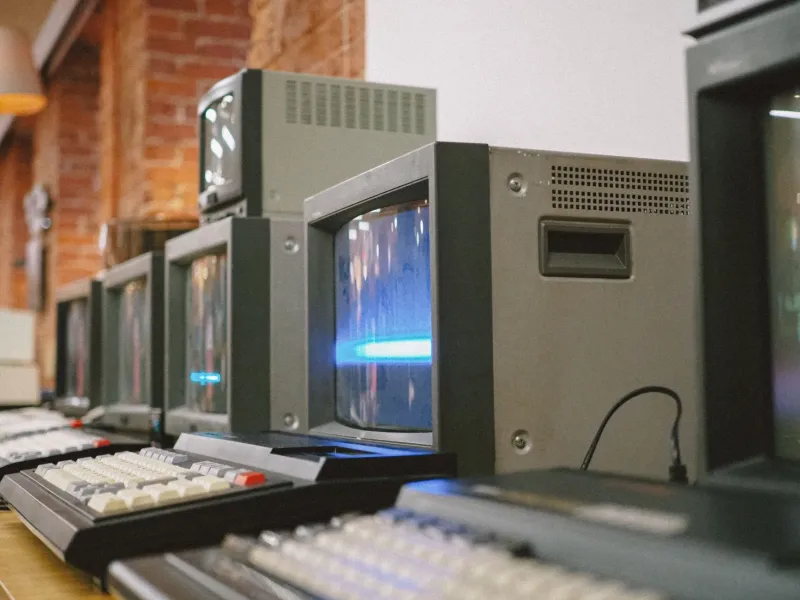
Walk into the right basement in America right now and you'll find something that looks like a time capsule exploded. Stacks of SNES cartridges. A Sega Genesis hooked up with the original RF cable. And sitting front and center — not a sleek ultrawide monitor, not a 4K OLED display — but a chunky, heavy, gloriously ugly cathode ray tube monitor from somewhere around 1996. The owner probably paid more for that CRT than you'd expect. Maybe a lot more.
This isn't nostalgia for its own sake. There's actual science behind why serious retro gamers refuse to let go of these boxy relics, and it's turning old office surplus monitors into surprisingly hot commodities on the collector market.
The Lag Problem Nobody Talks About Enough
Here's the thing about modern displays that flat-screen evangelists don't love to advertise: they introduce input lag. Every pixel on an LCD or OLED screen has to be processed, upscaled, and rendered before it hits your eyes. For modern games built with that delay in mind, it's barely noticeable. But plug a Super Nintendo into a modern television and suddenly your jumps in Super Mario World feel just slightly... off. Your fireballs in Street Fighter II land a fraction of a second after you pressed the button. For casual play, sure, you can live with it. For anyone who grew up mastering these games frame by frame, it feels like playing through wet cement.
CRT monitors have essentially zero input lag. The electron gun draws the image directly onto the phosphor screen in real time, line by line, refreshing so fast that the signal from the console and the image on screen are functionally simultaneous. When your thumb hits that button, the game responds right now. Not 20 milliseconds from now. Now.
For competitive players running speedruns, fighting game tournaments, or just trying to land that pixel-perfect jump in Mega Man, the difference is absolutely real.
Scan Lines Aren't a Bug — They're the Feature
There's another piece of this that gets overlooked even more: the visual design of old games was built specifically for CRT displays. Developers in the 8-bit and 16-bit eras knew exactly what kind of screen their games would be played on, and they designed sprites accordingly. The dark gaps between scan lines — those horizontal bands that give old games their characteristic look — weren't an accident. They were baked into the art direction.
On a modern display, classic sprites often look like chunky blobs of flat color. The pixels are rendered hard-edged and clinical in a way the original artists never intended. On a proper CRT, those same sprites have a softness, a bloom, a depth that comes from the way phosphor glows and bleeds slightly at the edges. Colors blend in ways that modern displays can't replicate without heavy post-processing filters. Sonic the Hedgehog on a Sony PVM monitor looks the way it was supposed to look. On a modern 4K screen, he looks like a craft project.
The Underground Economy of CRT Hunters
All of this has quietly created a collector market that most people outside the retro gaming community have no idea exists. Certain CRT models have become genuinely hard to find and increasingly expensive. The Sony PVM series — professional video monitors originally used in broadcast studios — are the holy grail. A Sony PVM-20M4U in good working condition can fetch anywhere from $300 to over $1,000 depending on condition and who's bidding. The BVM line, Sony's broadcast-grade monitors, regularly go for even more.
But it's not just the premium professional gear. Consumer-grade Trinitron monitors from the mid-90s, once given away for free or dumped at thrift stores for $5, are quietly disappearing from Goodwill shelves as collectors wise up. Even mid-range models from brands like Commodore, Magnavox, and NEC have found second lives in gaming setups across the country.
The tricky part is that CRTs are heavy, fragile, and genuinely dangerous to repair if you don't know what you're doing. The capacitors inside these monitors can hold a lethal charge even when unplugged. That's created a surprisingly robust niche industry of CRT restoration specialists — technicians who recap old monitors, adjust convergence, replace worn components, and bring decades-old tubes back to pristine working condition. Some of these folks operate out of small shops or home workshops and have waiting lists stretching months. They charge real money for their expertise, and collectors are more than willing to pay it.
What Collectors Are Actually Spending
Talk to people deep in this hobby and the numbers get interesting fast. Marcus, a retro gaming collector in Portland, Oregon, estimates he's spent close to $2,500 building out his CRT setup — including the monitor itself, professional recapping work, custom RGB cables, and the shelf reinforcements required to actually hold the thing safely. "People think I'm crazy," he says, "until they sit down and play Castlevania on it. Then they get it immediately."
In online communities like Reddit's r/crtgaming, threads about specific monitor models read like audiophile forums debating turntables. People argue passionately about dot pitch measurements, phosphor decay rates, and the subtle visual differences between a Trinitron aperture grille and a shadow mask display. There are spreadsheets. There are very detailed spreadsheets.
The shipping challenge alone has become a sub-hobby. CRTs are heavy — a 20-inch monitor can weigh 50 pounds or more — and fragile enough that shipping one across the country is a genuine logistical puzzle. Local pickup is strongly preferred, which means collectors often drive hours to retrieve a specific model. Facebook Marketplace and Craigslist have become the de facto hunting grounds, and knowing what to search for is itself a form of expertise.
The RetroVault Angle: These Are Collectibles Now
For anyone who frequents RetroVault, this story has a familiar shape. Objects that were once considered obsolete — destined for landfills or forgotten in storage units — have crossed the line into genuine collectibles. The CRT monitor isn't just a piece of old tech anymore. It's a functional artifact that delivers an experience modern hardware genuinely cannot replicate. That combination of historical significance and practical superiority is exactly what separates a true collectible from simple junk.
The window to find these monitors in good condition is narrowing. Phosphor screens degrade over time. Components fail. Each year, more of them end up in e-waste recycling programs, gone forever. The collectors who understand what they're looking at are already moving.
If you've got an old CRT sitting in your garage from a decade-old office cleanout, it might be worth a closer look before you haul it to the curb. Depending on the model, you could be sitting on something a retro gamer would happily drive three states to pick up.
Scan lines included.